The DeFi sector's been getting a lot of hype recently, promises of recovery floating around after the October crypto crash. But let's be real: hype doesn't pay the bills. The numbers tell a less optimistic story, one of struggling tokens and shifting investor sentiment. A recent FalconX report paints a bleak picture – as of November 20th, only 2 out of 23 leading DeFi tokens are actually up year-to-date. That's less than a 10% success rate, a far cry from the promised land of decentralized finance. The group is down 37% on average for the quarter-to-date. That extended sell-off is what I'd call "damage."
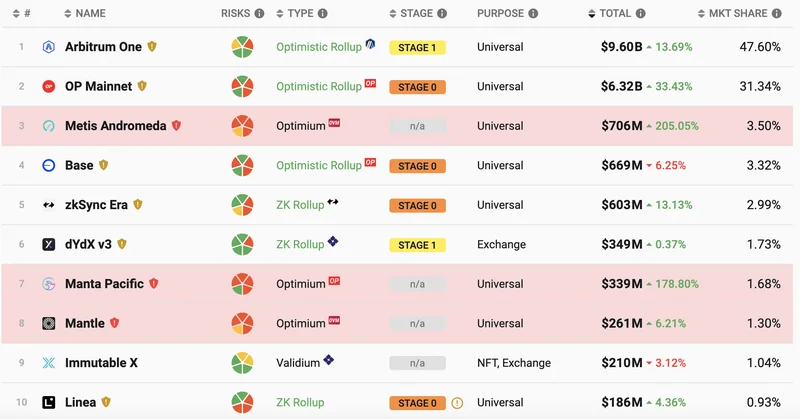
It's not a uniform disaster, of course. There are nuances, as the report delicately puts it. Investors appear to be rotating into what they perceive as safer bets. We're talking tokens with buyback programs, like HYPE (down 16% QTD) and CAKE (down 12% QTD), which posted some of the best returns among larger market cap names. And then there are tokens with "fundamental catalysts," a phrase that always makes me reach for my calculator. MORPHO (down 1%) and SYRUP (down 13%) apparently outperformed their lending peers due to idiosyncratic events, like not getting completely wrecked by the Stream finance collapse. Minimal impact from a disaster shouldn't be a selling point; it should be the baseline expectation.
The valuation landscape is getting a makeover, but not necessarily in a good way. Certain DeFi subsectors have become more expensive (on a multiples basis), while others have cheapened relative to September 30th. Spot and perpetual decentralized exchanges (DEXes) have seen their price-to-sales multiples compress, because their prices declined faster than their protocol activity. The report highlights a few DEXes – CRV, RUNE, and CAKE – that posted greater 30-day fees as of November 20 compared to September 30. That's something, I guess.
But let's dig into that "greater 30-day fees" claim. It sounds good on the surface, but what does it actually mean? Did those fees increase enough to offset the price declines? The report doesn't say, and that silence speaks volumes. It’s like saying a company increased its revenue by 5%, while conveniently omitting the fact that its expenses skyrocketed by 50%. The net result is still a loss, no matter how you spin it. Similar trends are seen across perp DEXes with HYPE and DYDX multiples compressing faster than declines in their fee generation. So they're making less money, relatively speaking, even as their prices tank.
Lending and yield names have broadly steepened on a multiples basis, as prices have declined considerably less than fees. KMNO is trotted out as an example: its market cap fell 13% over this period, while fees declined 34%. That's not a good look for anyone. Another factor, according to the report, is that investors are "crowding" into lending names, because lending and yield-related activity is often seen as "stickier" than trading activity in a downturn. Basically, people are clinging to anything that looks remotely stable in a sea of red. Lending activity may even pick up as investors exit to stablecoins and seek yield opportunities.
Here's where things get interesting. While the DeFi market is floundering, Bitcoin is showing signs of life. Forecasts for 2025 are directionally bullish, with some analysts projecting a trading range between $80,440 and $151,200. Stretched targets even reach $175,000 to $185,000. The midpoint of that range suggests a strong bullish trend, driven by ongoing institutional adoption and broader acceptance.
But here's the rub: Bitcoin's strength isn't necessarily translating into a rising tide for the rest of the crypto market. The report points out that Bitcoin dominance is breaking out, meaning it's stronger than the rest of the altcoin space. Altcoins need Bitcoin to take the lead initially, allowing for profits to rotate into them once Bitcoin has experienced a strong rally. The same happened in 2017, 2020, and 2023. Will 2025 be any different? Maybe, maybe not. But I'm not holding my breath. I've looked at hundreds of these market cycles, and the "trickle-down" effect is never guaranteed.
And this is the part of the report that I find genuinely puzzling. If Bitcoin is poised for a breakout, and DeFi tokens are struggling, why aren't more investors rotating out of DeFi and into Bitcoin? Is it inertia? A stubborn belief in the long-term potential of DeFi? Or is it simply a lack of awareness of the underlying data? I suspect it's a combination of all three. People have their favorite altcoins, and they are reluctant to give them up.
The DeFi sector is selling a dream of decentralized finance, but the numbers suggest that dream is turning into a data-driven delusion. Investors are chasing returns in a struggling market, rotating into "safer" tokens that are still losing value, and clinging to the hope that Bitcoin's success will eventually trickle down. But hope isn't a strategy, and the data doesn't lie. The DeFi sector needs more than hype; it needs a fundamental shift in its underlying economics. Until then, it's just a mirage in the desert.
The "decentralized" part is doing better than the "finance" part.
Crypto Market: The SEC Just Pulled the Plug.
2025-12-05